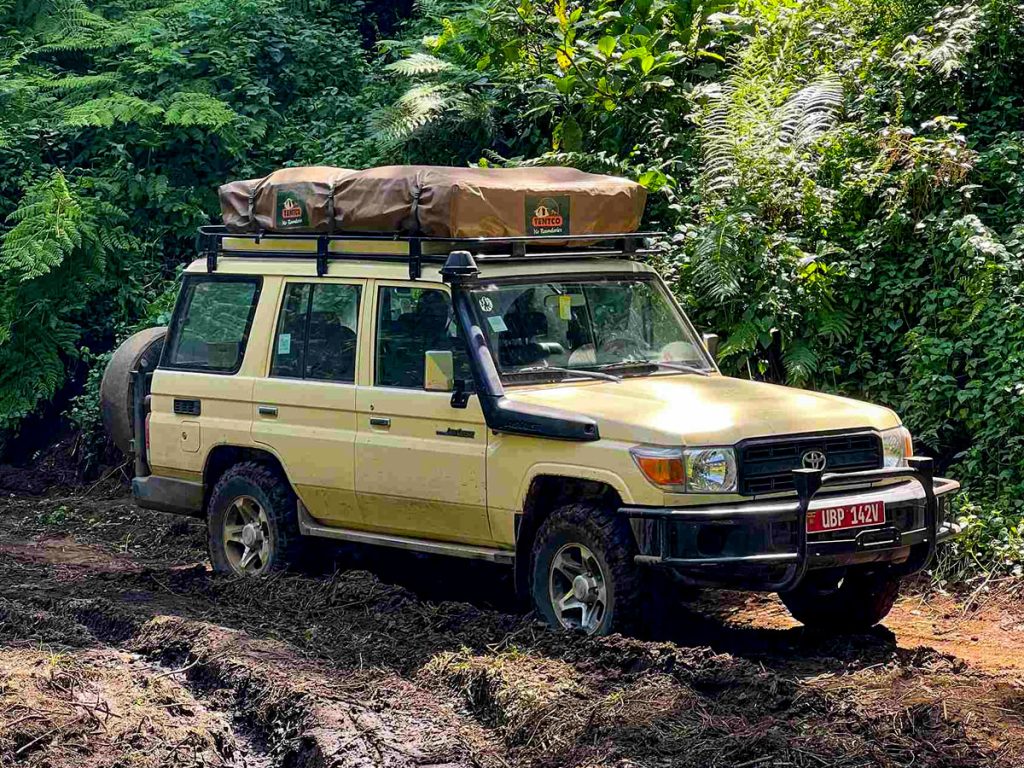
Find useful Uganda travel information on driving, 4×4 rentals, road distances, national parks, camping, permits, entry requirements, safety and the best time to visit. Planning a trip to Uganda is easier when you understand the country’s roads, travel requirements, national park regulations, accommodation options and general travel conditions.

Whether you are planning a self-drive safari, renting a 4×4 with a rooftop tent, travelling with a driver-guide or visiting Uganda’s famous national parks, the following Uganda useful information can help you prepare for your journey.
Uganda drives on the left-hand side of the road, and a reliable 4×4 vehicle is recommended for many safari routes and rural roads. International visitors generally need an International Driving Permit (IDP) together with their home driving licence. Speed limits commonly range from approximately 50 to 100 km/h, depending on the type of road and location. Police checkpoints are also common, so drivers should always carry the required documents and follow local traffic regulations.
Uganda can involve long driving distances between Kampala and the country’s major safari destinations. As a general guide, travelling from Kampala to Murchison Falls National Park can take around 5–6 hours, while Queen Elizabeth National Park may take approximately 6–7 hours. Reaching Bwindi Impenetrable National Park can take about 8–10 hours, depending on the route, road conditions and stops along the way. When planning a Uganda self-drive itinerary, allow enough time for realistic daily travel rather than covering excessive distances.
Certain areas of Uganda, particularly some regions close to the South Sudan border, may have additional access requirements or restrictions. National parks and other protected wildlife areas also have strict rules governing vehicle movement, including restrictions on off-road driving. Before setting out, check the latest regulations and access requirements for the specific destinations included in your itinerary.
Travellers who prefer not to drive themselves can hire a professional driver-guide, with rates often starting at around $30 per day, depending on the vehicle, itinerary and service package. Having a driver can reduce the stress of navigation and provide useful local knowledge about roads, attractions, wildlife and travel conditions. A driver-guided 4×4 safari can be particularly convenient for visitors travelling to Uganda for the first time while still allowing flexibility within the itinerary.
Safari expenses in Uganda include national park entrance fees, activity permits and vehicle charges. Park entry fees can vary by destination and visitor category, with typical rates ranging from approximately $40 to $80 per day. Gorilla trekking permits are around $800, while chimpanzee tracking permits can cost approximately $300. Vehicle fees may also apply, with charges around $50 in some cases. Popular activities such as gorilla trekking can have limited availability, so arranging permits several months ahead—often 4–6 months before travel—is advisable.
Camping is one of the ways travellers can reduce accommodation costs while experiencing Uganda’s natural landscapes more closely. Public campsites may cost around $5–6 per night, while private camping areas can range from approximately $10–20 per night. Some wilderness camping options may require permits costing around $40. Travellers can also rent rooftop tents and camping equipment, making a self-drive camping safari a practical option for visitors looking for an adventurous and budget-conscious way to explore Uganda.
Uganda can be visited throughout much of the year, but the dry seasons from June to September and December to February are generally popular for safari travel. During these periods, wildlife may be easier to spot because animals often gather around available water sources, while many roads are more accessible. If you plan to go gorilla trekking during busy travel periods, it is wise to arrange your permit well in advance because availability can be limited.
Before travelling to Uganda, international visitors should check the latest entry requirements that apply to their nationality. Depending on nationality and current regulations, travellers may need an Uganda e-Visa, with fees commonly falling within the $50–100 range. A valid yellow fever vaccination certificate may also be required. Visitors driving themselves should carry an appropriate driving licence and IDP where required. Your passport should generally have at least six months of validity remaining. Applying for travel documents 2–3 weeks before departure provides time to address potential delays, although earlier preparation is recommended.
The total cost of a Uganda trip depends on the vehicle, accommodation, activities, route and travel style. A self-drive 4×4 rental may cost around $40 – $200 per day, while camping can cost approximately $20 per night depending on the campsite and facilities. National park fees may range from $35–80 per day, excluding additional activities and permits. A general travel budget of approximately $400–900 per person per week can provide a useful starting point, although safari activities such as gorilla trekking can significantly increase the total cost. Camping can help reduce accommodation expenses for travellers on a tighter budget. (Note: Figure varry/change depending on the travel season, car model and travel destinations)
Responsible tourism helps protect Uganda’s wildlife, communities and natural environment. Travellers should support local businesses and communities, follow wildlife viewing guidelines and maintain appropriate distances from animals. Avoiding unnecessary environmental damage, reducing waste and choosing responsible or eco-conscious tourism providers can also contribute to conservation. Respecting park rules and local communities helps preserve Uganda’s natural attractions for future visitors.
Uganda welcomes tourists from around the world, but visitors should take normal travel precautions and follow current local advice. Avoid driving at night, particularly when travelling unfamiliar routes or rural roads. When camping, use established or ranger-guarded campsites where appropriate and keep valuables secure. Always follow guidance from park authorities, local officials and experienced travel providers. For additional assistance during a self-drive trip, 4×4 Rooftop Tent Cars LTD provides 24/7 support to help travellers deal with questions or unexpected situations while exploring Uganda.
Having the right information before travelling can make your Uganda adventure more comfortable, safer and easier to organize. From choosing a suitable 4×4 and understanding driving distances to arranging park permits, camping equipment and entry documents, good preparation allows you to spend more time enjoying Uganda’s landscapes, wildlife and cultural experiences.
Whether you choose self-drive car rental, a 4×4 with a rooftop tent or a vehicle with a professional driver, understanding these essential Uganda travel tips can help you create a practical itinerary that matches your budget and travel plans.